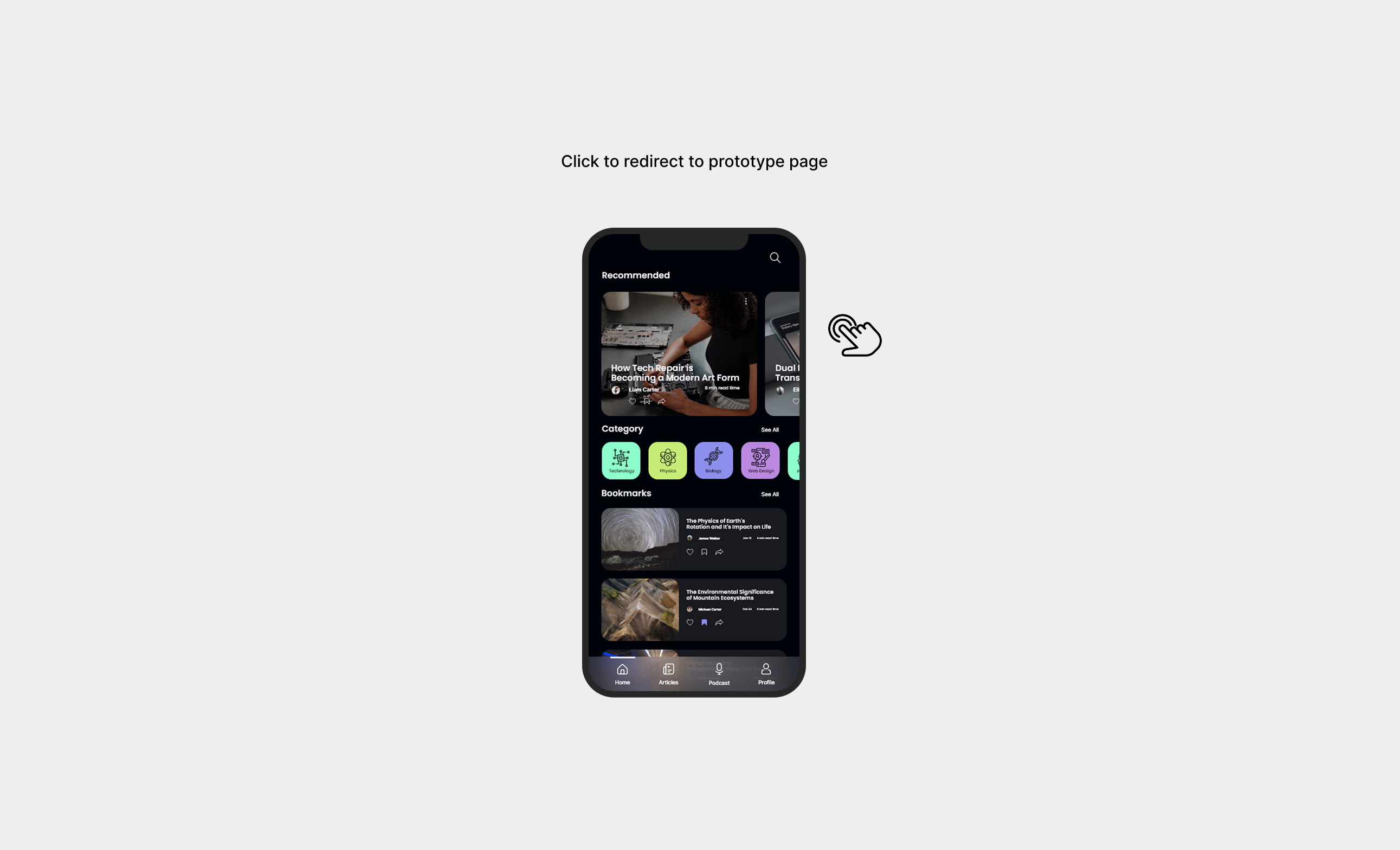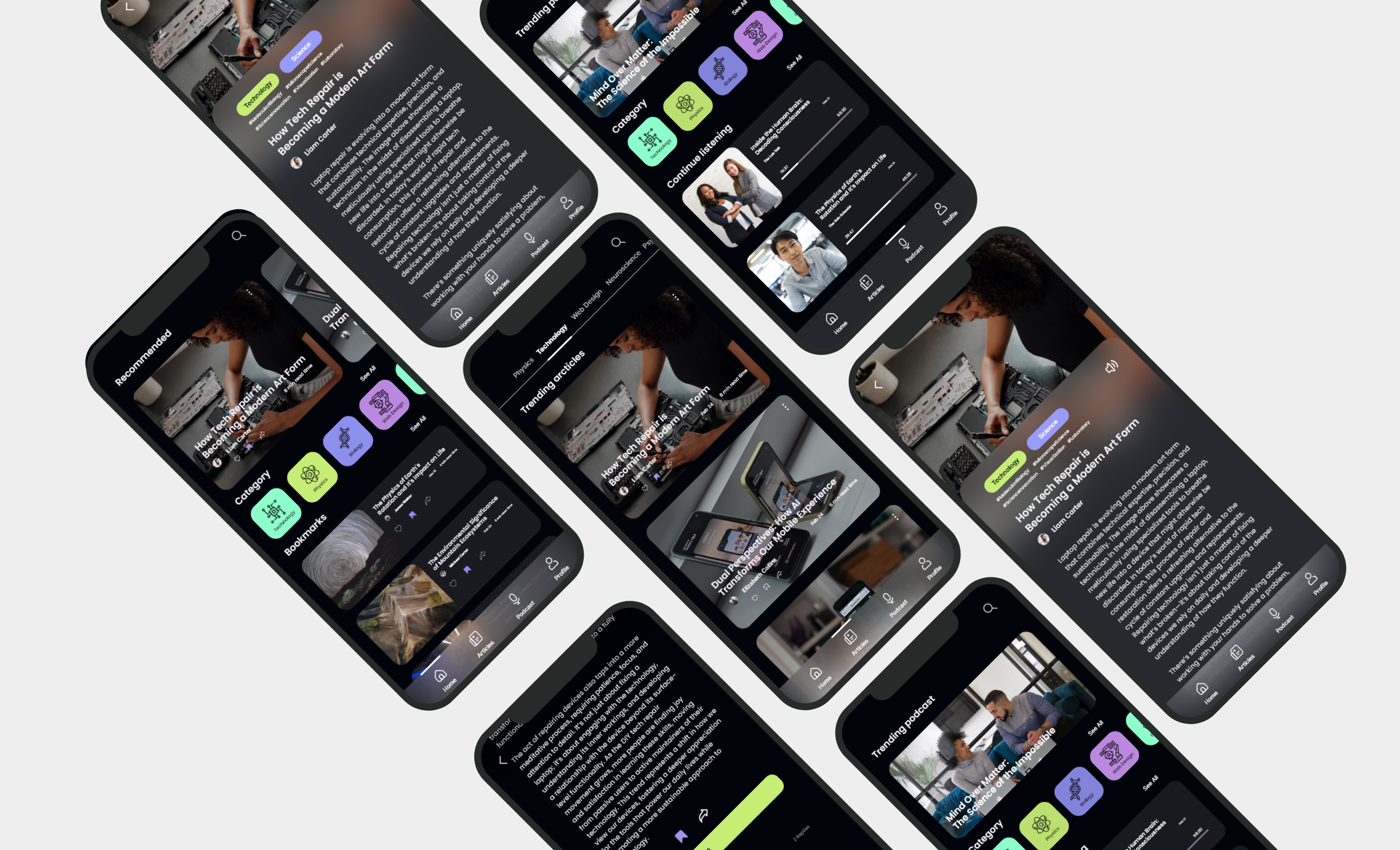
PROJECT OVERVIEW
STRUCTURING SCIENCE CONTENT
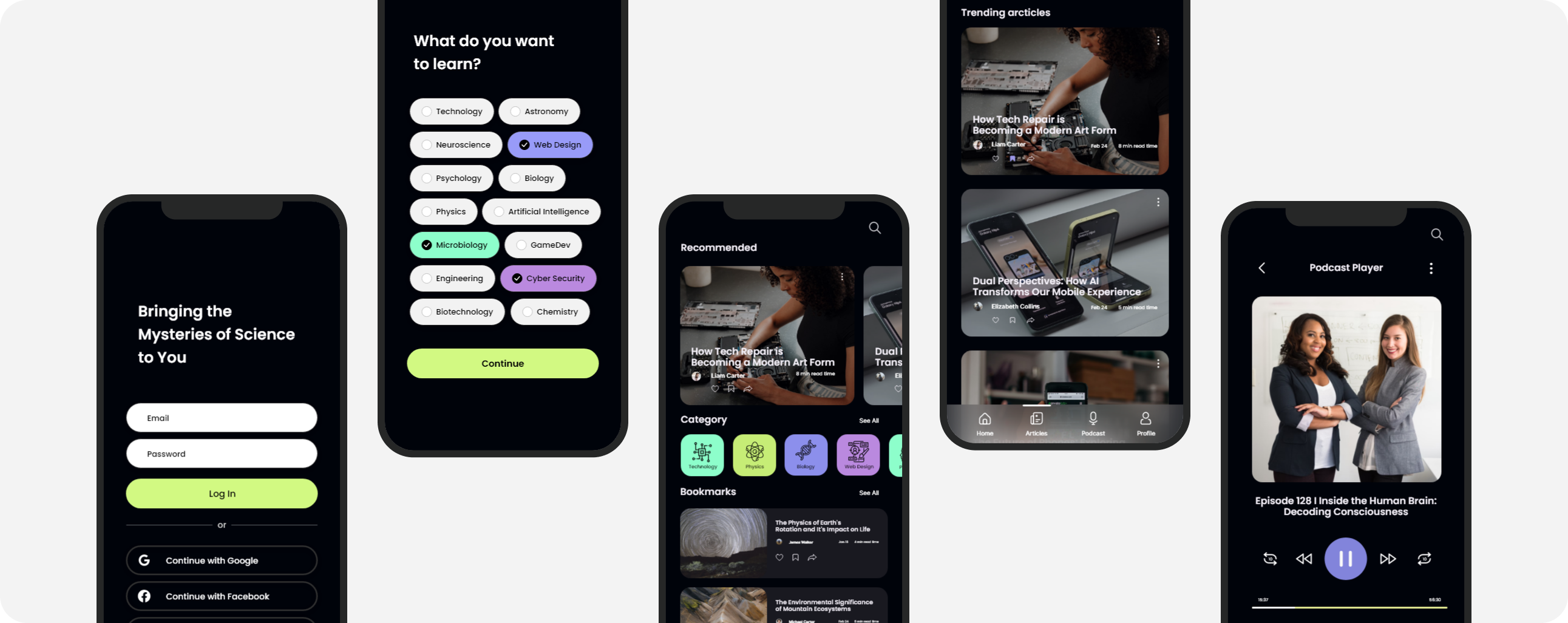
ScienceSphere is a mobile app that gathers popular science articles from various fields, organizing them into easy-to-navigate categories. With a clean and engaging design, it offers personalized features that enhance the reading experience and make exploring science more immersive than ever.
PROJECT TYPE
Article app
AUTHORS
I was responsible for all the phases of this project
TOOLS
Adobe XD, Figma, Adobe Photoshop, Adobe Illustrator
BACKGROUND & PROBLEM
THE KNOWLEDGE GAP IN A RAPID WORLD
Scientific information is more accessible than ever, yet meaningful engagement remains limited. Users rarely read digital content in full. Research from the Nielsen Norman Group shows that people read only 20–28% of text on an average webpage. Additionally, reports from SimilarWeb indicate that over half of mobile sessions last under 15 seconds, leaving little time for dense, unstructured articles. In a fast-paced digital environment, complex scientific knowledge often fails to translate into clear understanding.
ACCESSIBILITY AND ENGAGEMENT
Beyond limited attention spans, complex language and poor organization further reduce comprehension. According to the Pew Research Center, many adults report difficulty understanding scientific information presented in media. ScienceSphere responds to this challenge by gathering popular science content into clearly structured categories, using concise language and a clean, mobile-firendly design. Through personalization and intuitive navigation, the app makes scientific exploration accessible, engaging, and efficient.
RESEARCH GOALS
(1)
USER-FRIENDLY DESIGN
Develop a platform with an intuitive and easy-to-navigate design that enhances the user experience.
(2)
INTERACTIVITY AND ENGAGEMENT
Evaluate the platform's ability to increase user engagement and promote exploration of diverse scientific topics.
(3)
USER EXPERIENCE AND PERSONALIZATION
Create personalized content feeds based on user behavior to improve relevance and retention.
(4)
CLEAR AND HIGH-QUALITY CONTENT
Provide well-written scientific content in a clear, easy-to-read format that makes complex topics accessible to a broad audience.
(5)
COMMUNITY BUILDING
Foster a vibrant community of science enthusiasts through comments and meaningful discussions.
SECONDARY RESEARCH
(1)
WHAT I KNOW
Scientific content often feels intimidating due to it's complexity and poor organization. Research and observation show that clear language, thoughtful design, and strong content structure are essential for making science accessible. Usability and accessibility are not optional—they are fundamental.
(2)
WHAT I DON'T KNOW
User preferences and feature adoption remain uncertain. It's unclear how audiences will respond to personalization, interactive tools, or community features. There are also open questions around technical constraints, competitive differentiation, and sustainable monetization.
(3)
WHAT SUCCESS LOOKS LIKE
Success is defined by intuitive navigation, consistent engagement, and positive feedback on clarity and usability. Positive feedback on usability, content clarity, and overall experience will indicate the platform effectively bridges complexity and everyday understanding.
COMPETITIVE RESEARCH
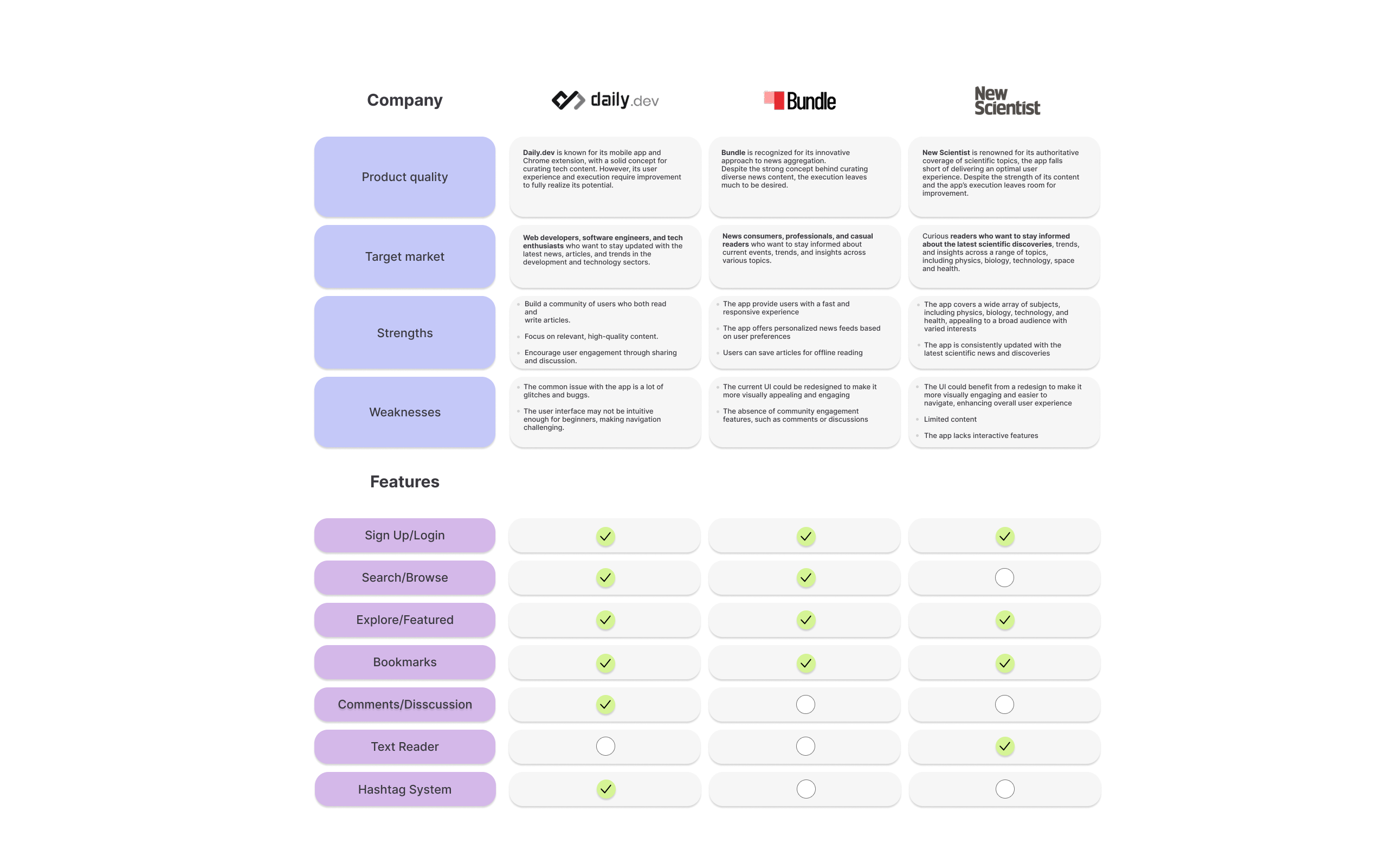
I conducted a competitive analysis by reviewing the 3 most similar apps:
USER AFFINITY MAPPING
I conducted interviews with five individuals (two students and three adults) who expressed interest in an application like this:
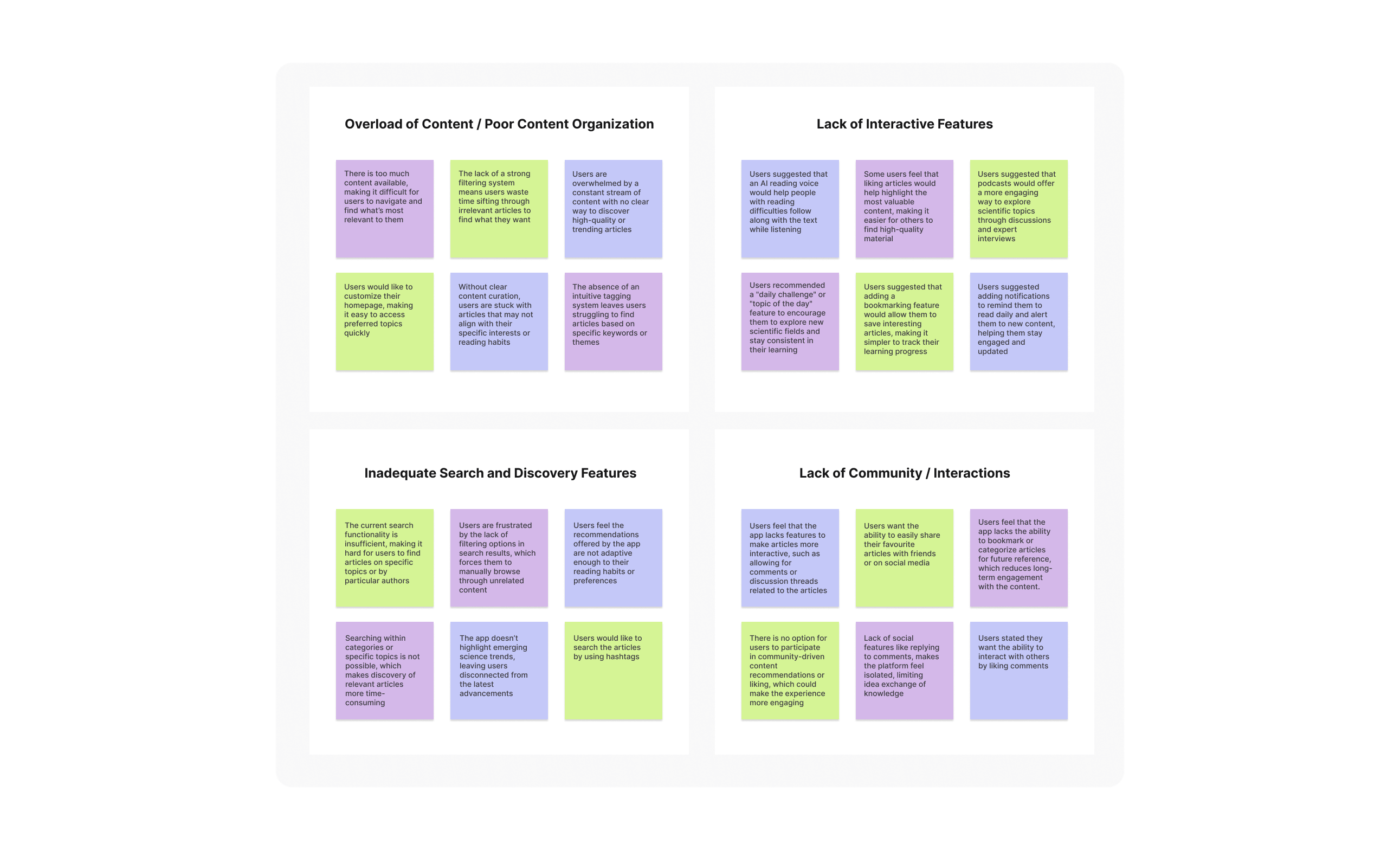
RESEARCH FINDINGS
I have identified four key insights from the research:
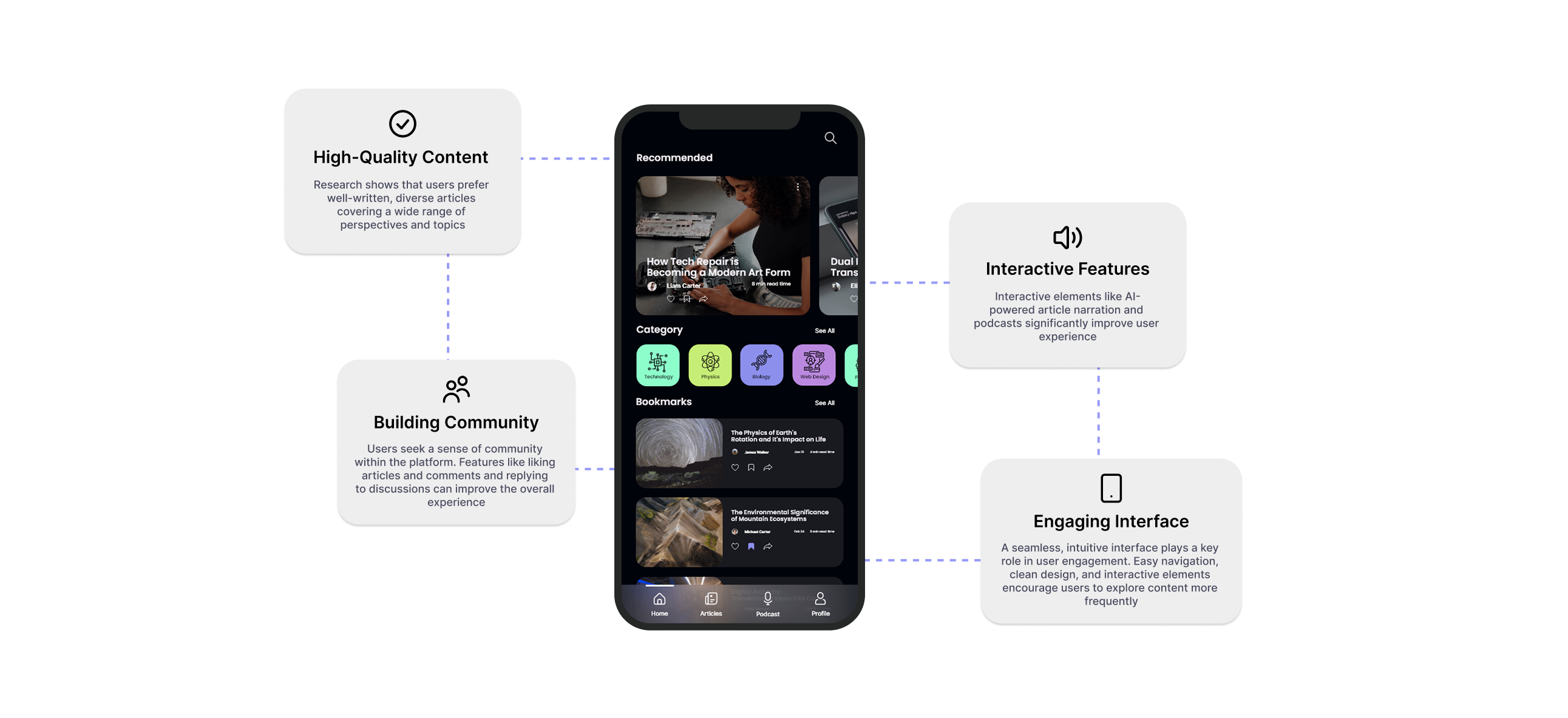
USER PERSONAS
The main user groups represented by personas:
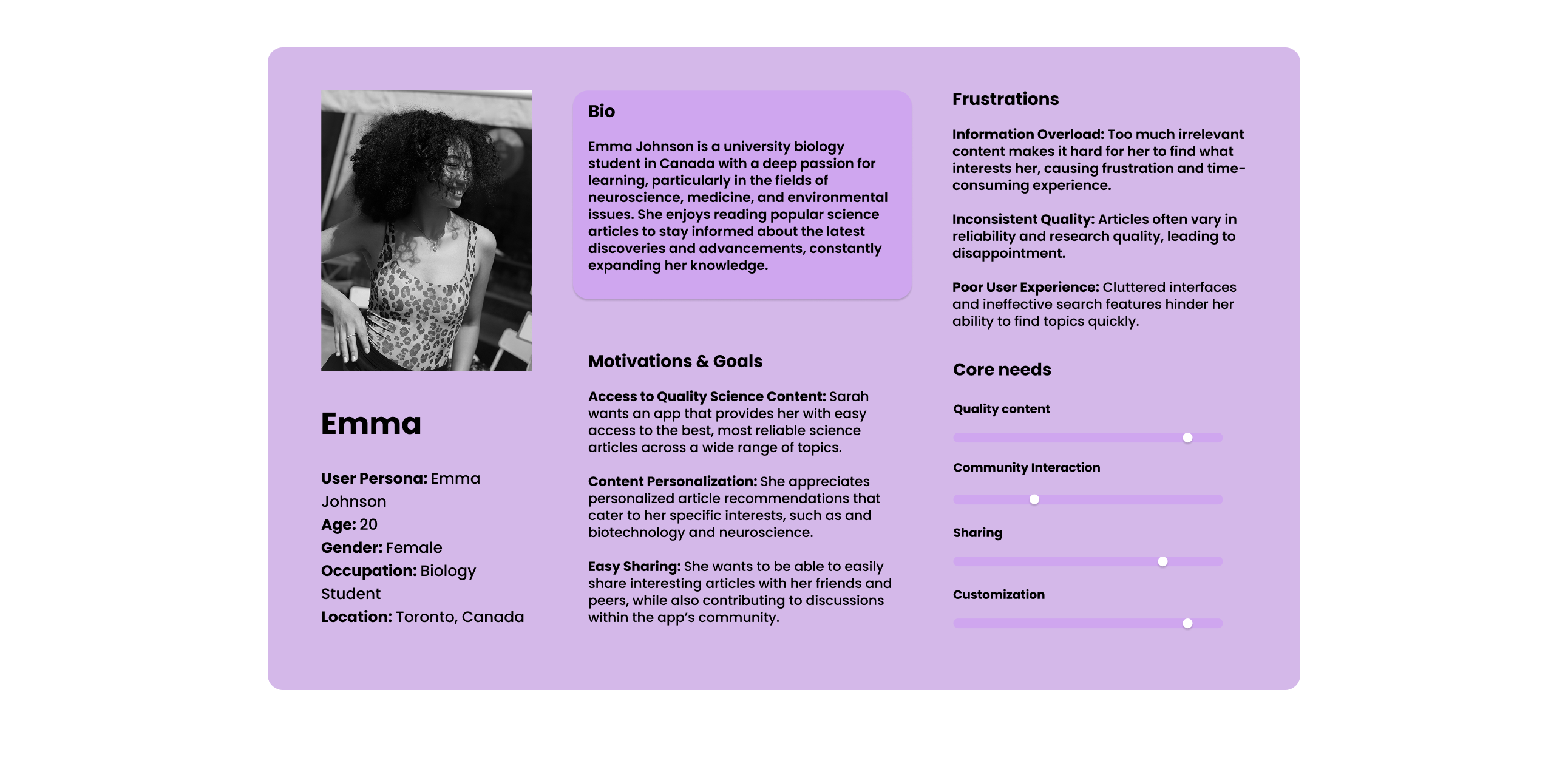
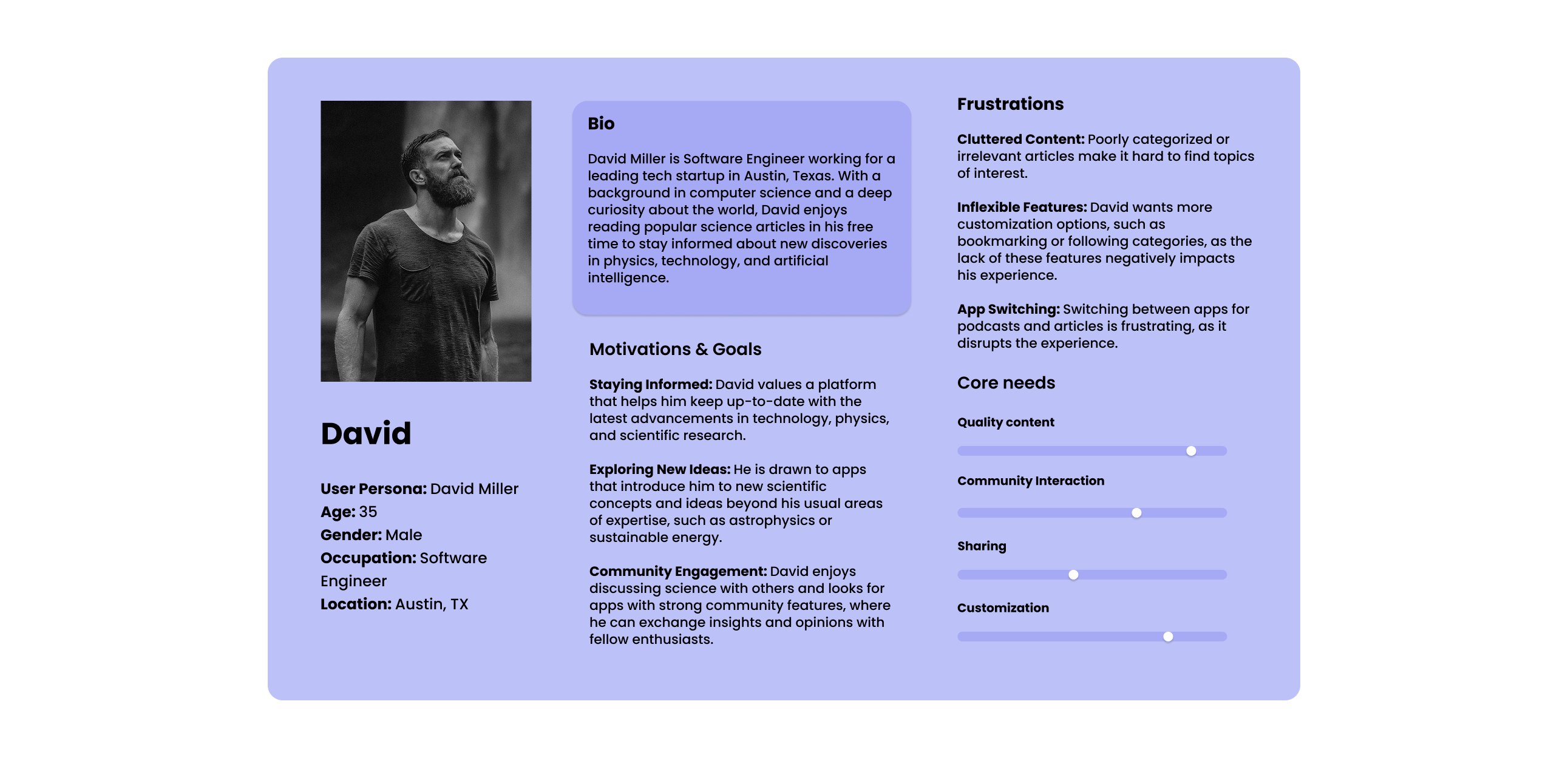
PROJECT GOALS
(1)
BUSINESS GOALS
Deliver high-quality, reliable science content, increase user engagement through new improved features, and grow the app through targeted marketing, partnerships, and future premium plans.
(2)
PROJECT GOALS
Improve content discoverability with better search and hashtags, integrate AI-powered features to enhance interactivity, and build an intuitive app with high-quality content and smart reading tools.
(3)
USER GOALS
Easily discover science articles that match their interests, receive personalized recommendations, and enjoy a smooth, intuitive, and user-friendly reading experience.
FEATURES ROADMAP
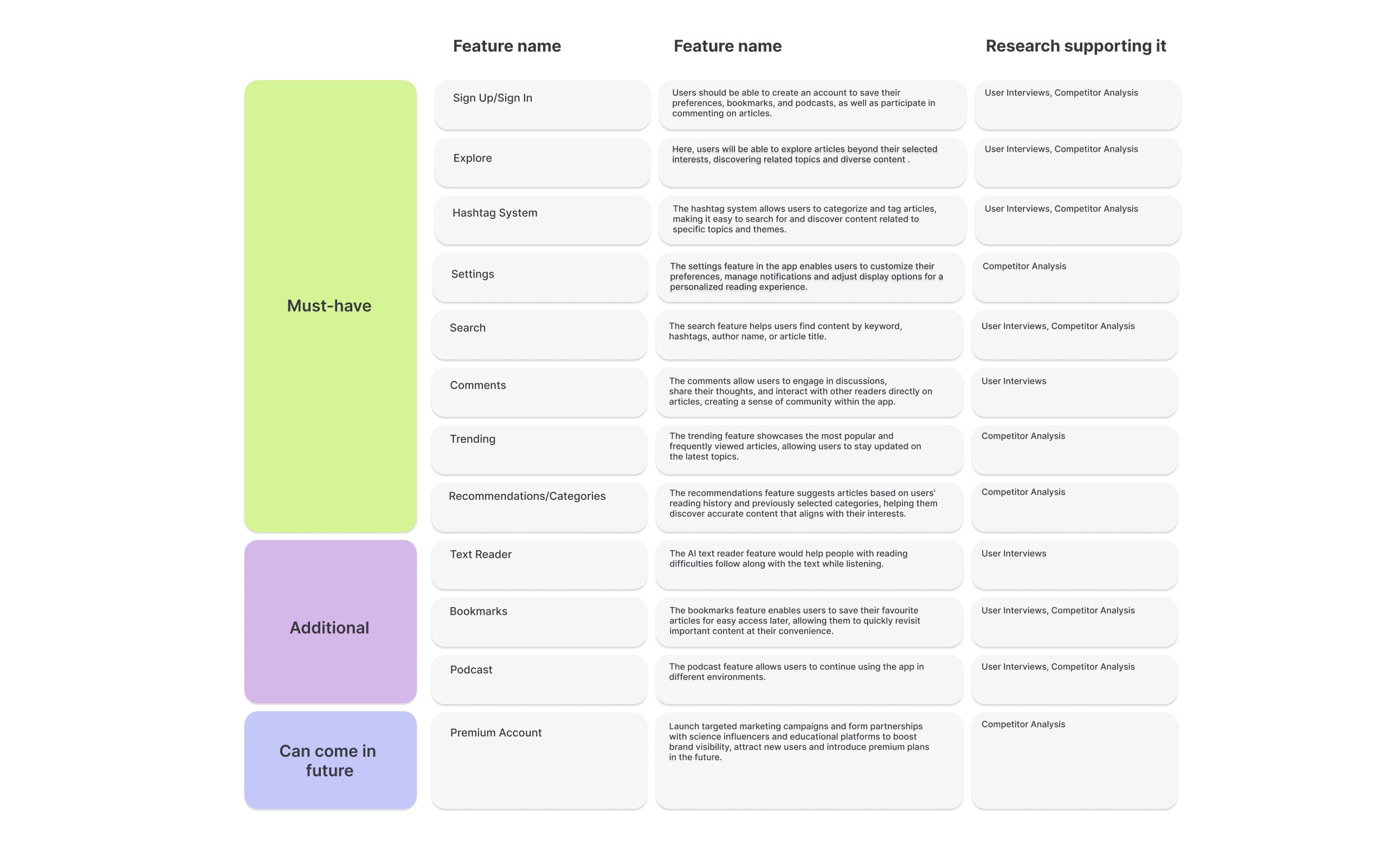
I have identified key features that should be included in my app:
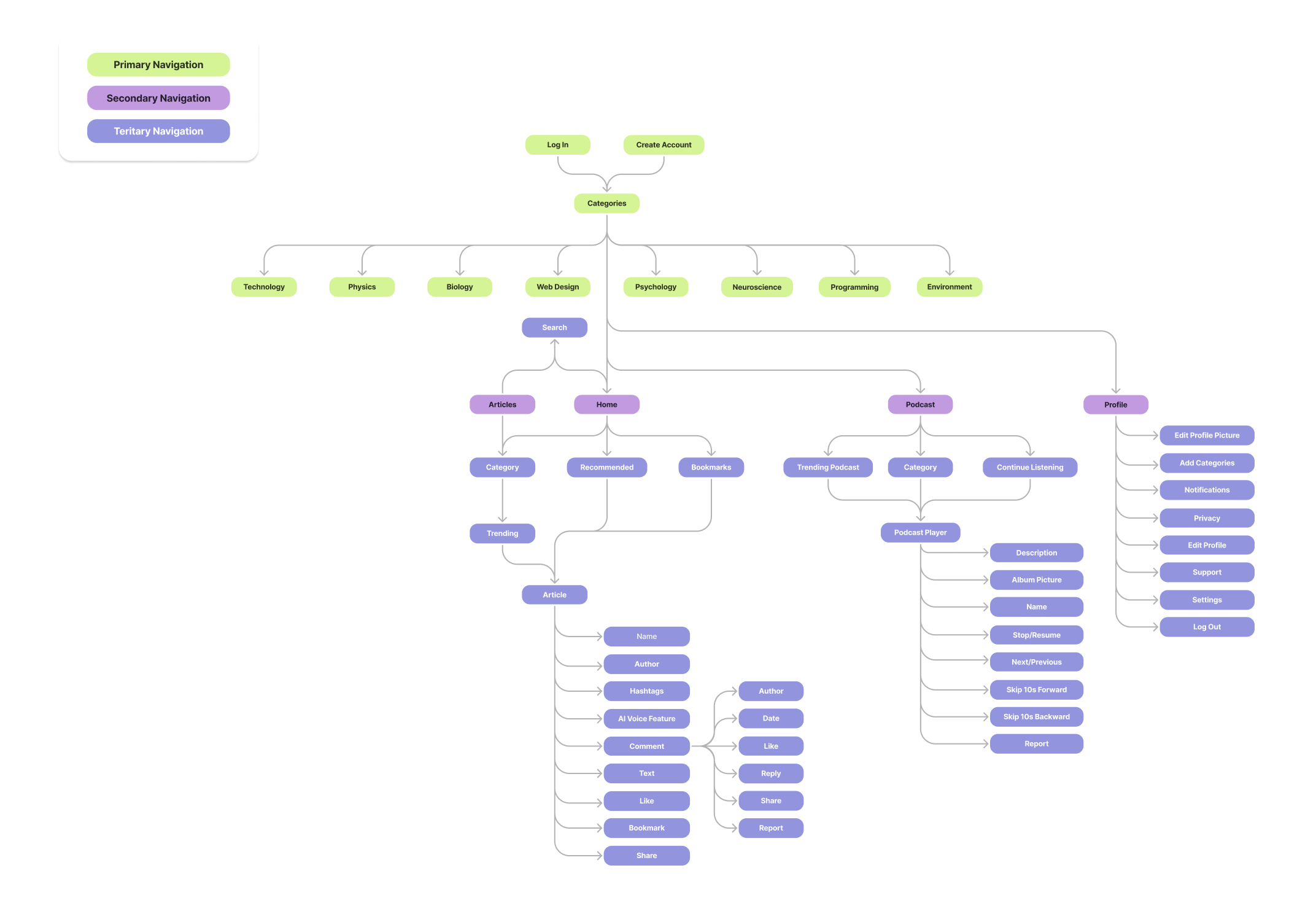
INFORMATION ARCHITECTURE
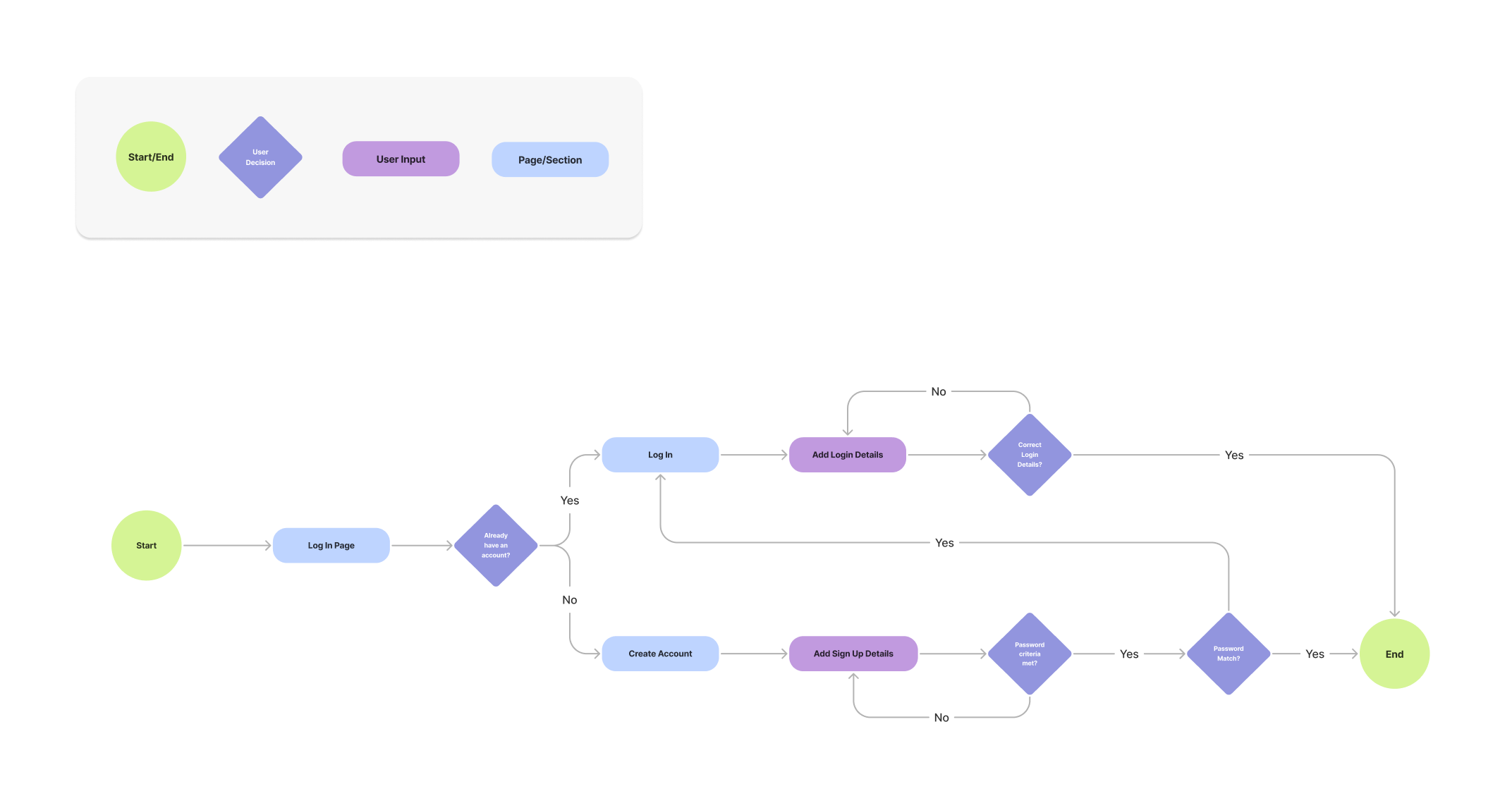
USER FLOW
Log In User Flow
User Flow
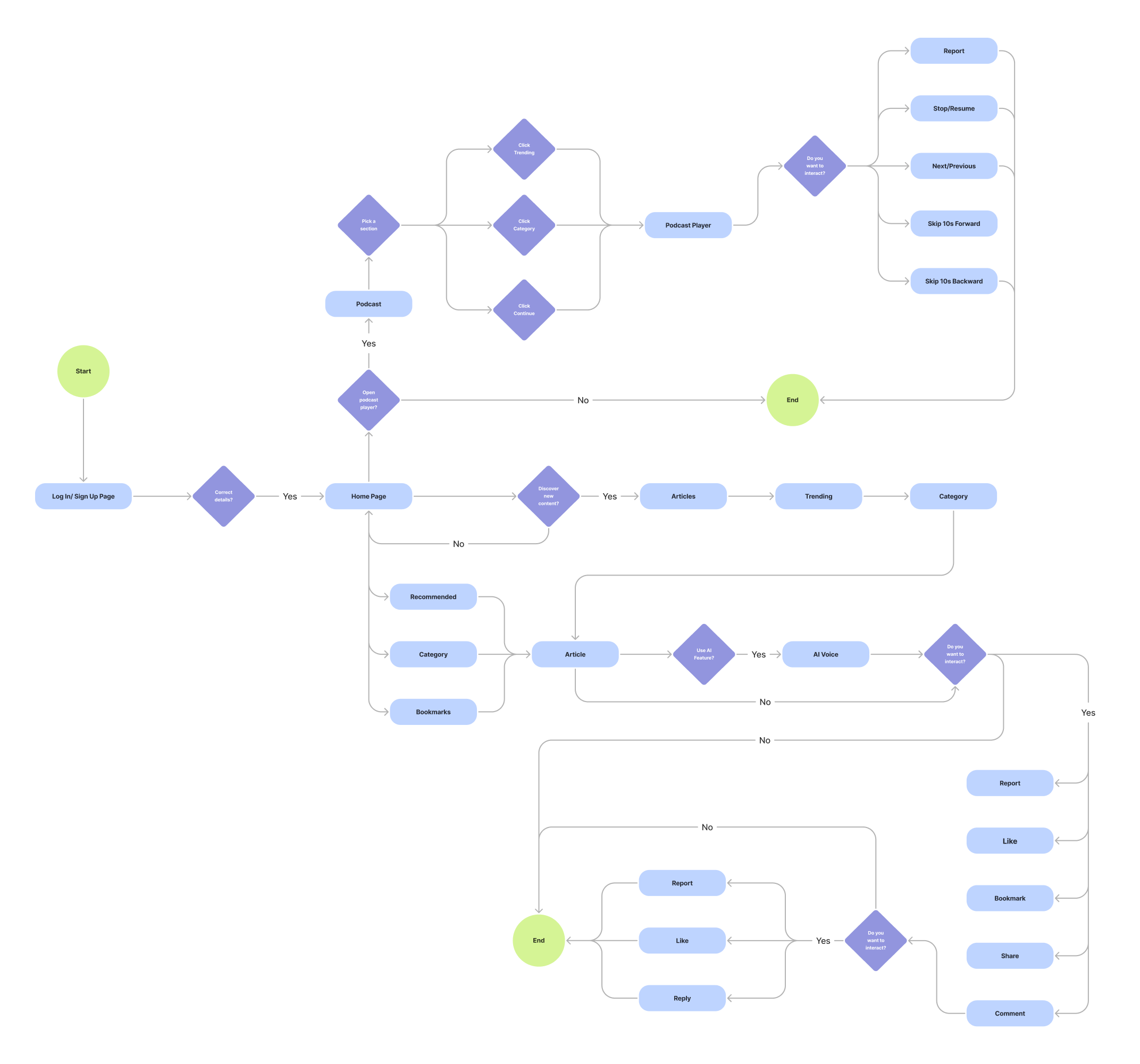
TASK FLOW
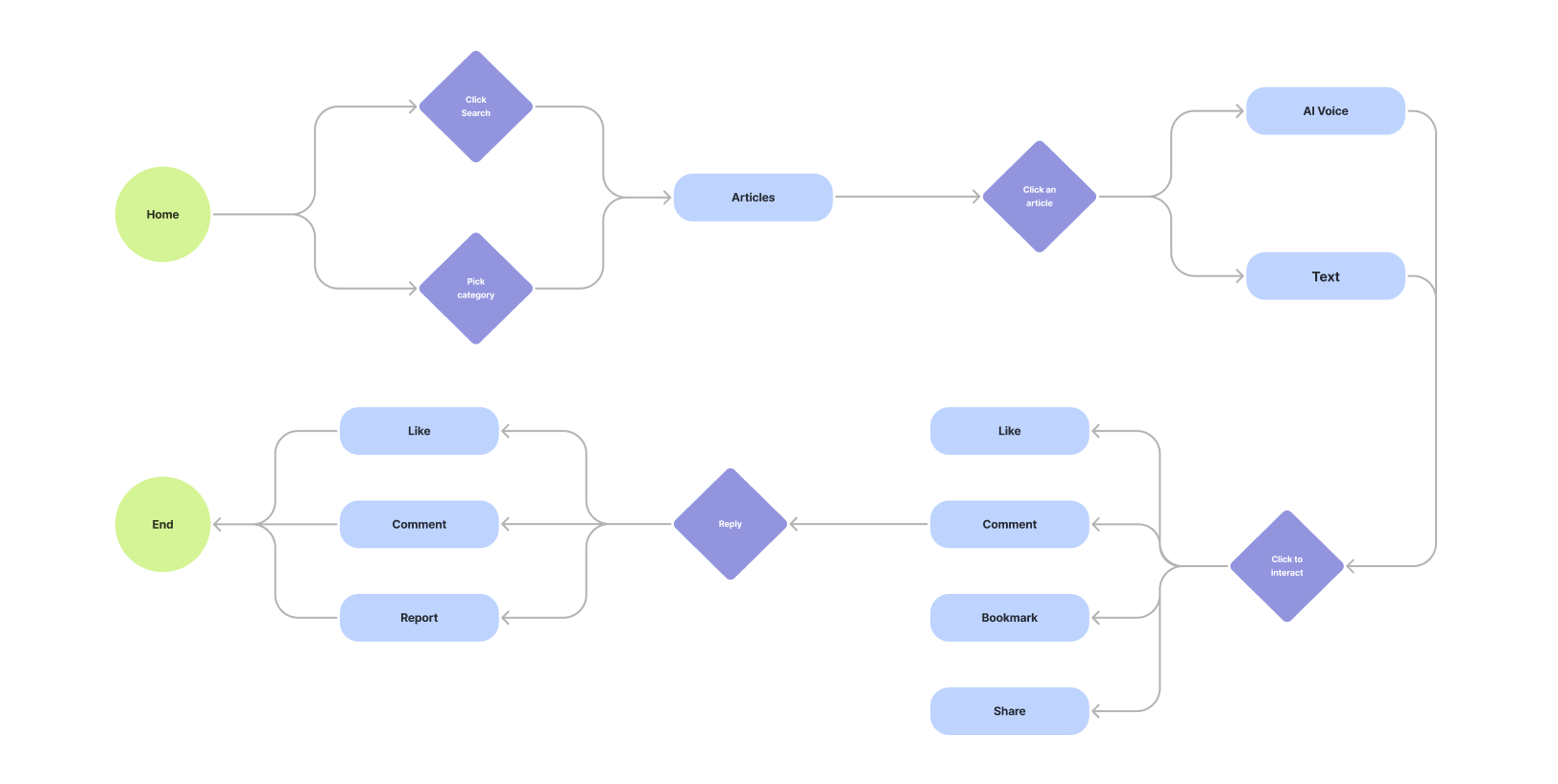
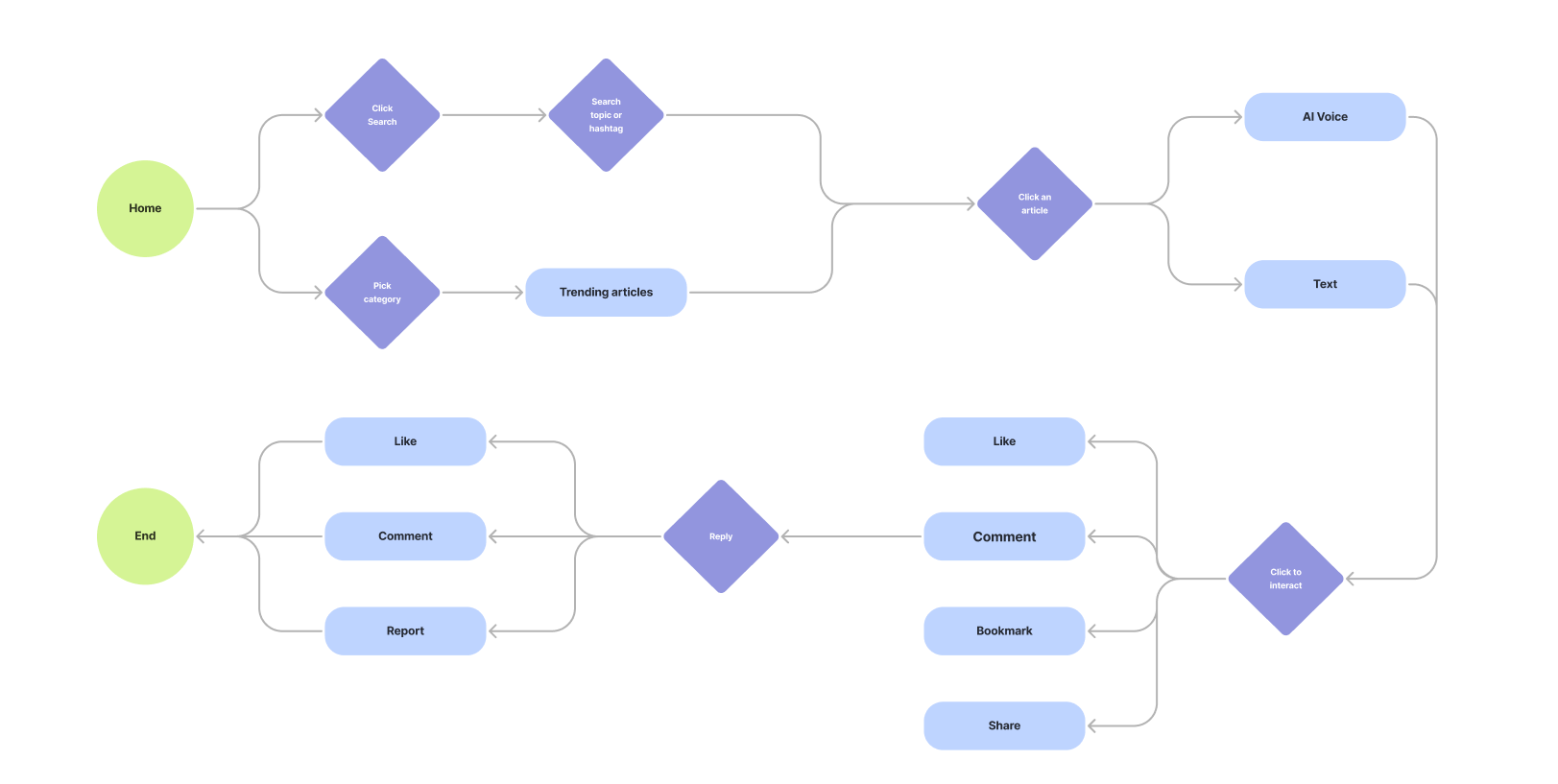
I have identified my two task user flows:
- Reading articles through Home
- Reading articles through Discover
Exploring new content through "Home"
Exploring new content through "Articles"
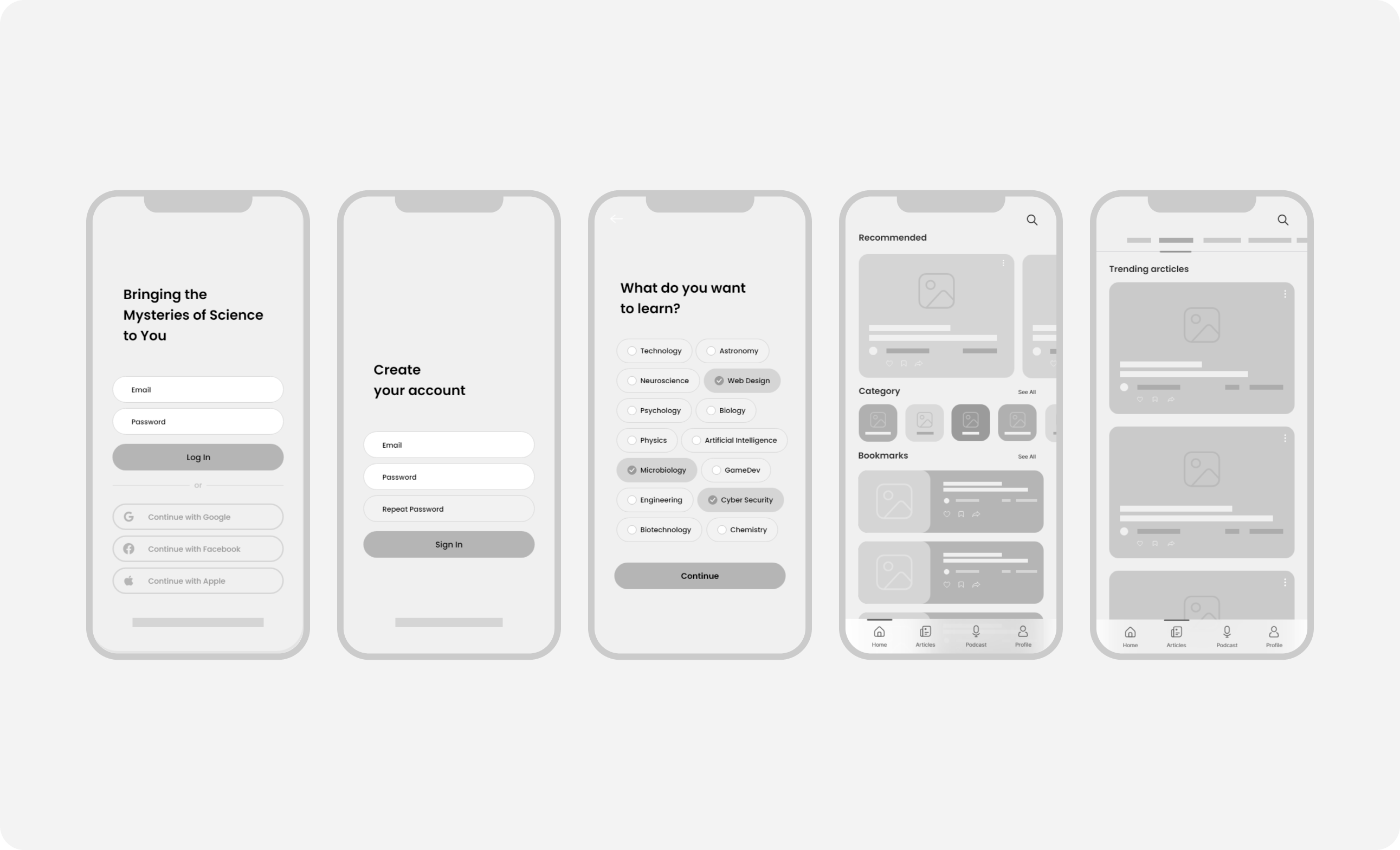
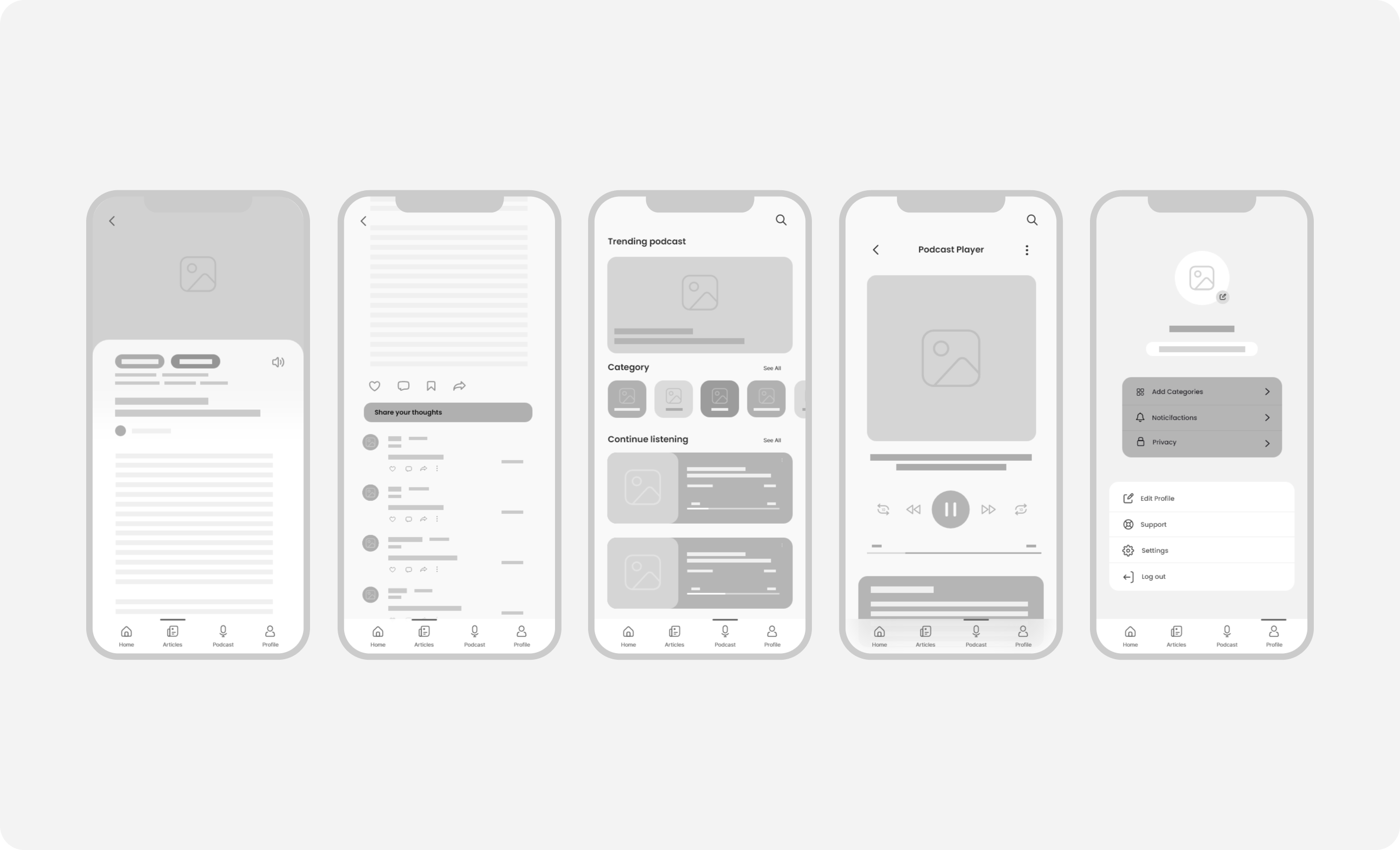
WIREFRAMES LOW-FIDELITY
UI COMPONENTS & BRAND IDENTITY
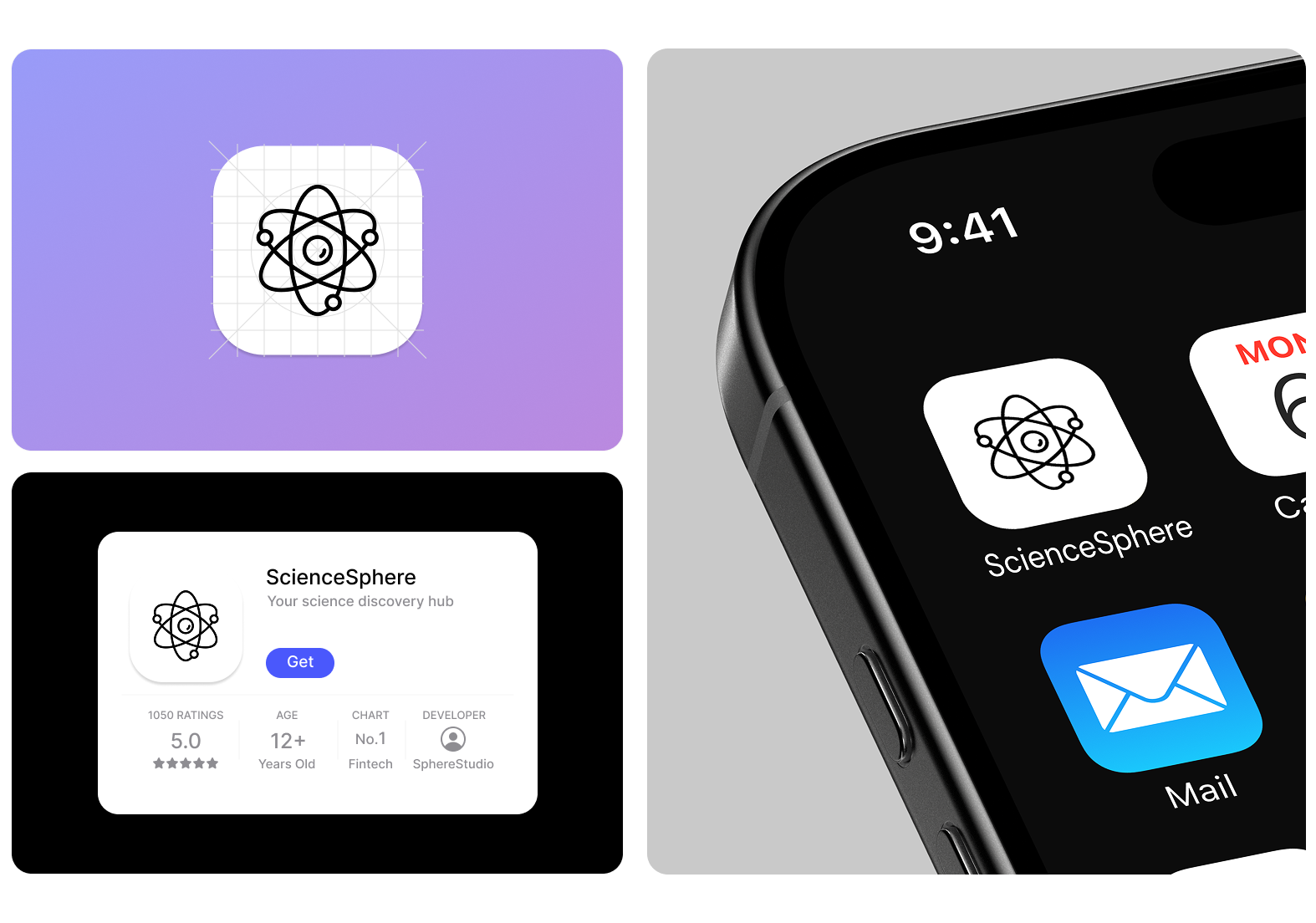
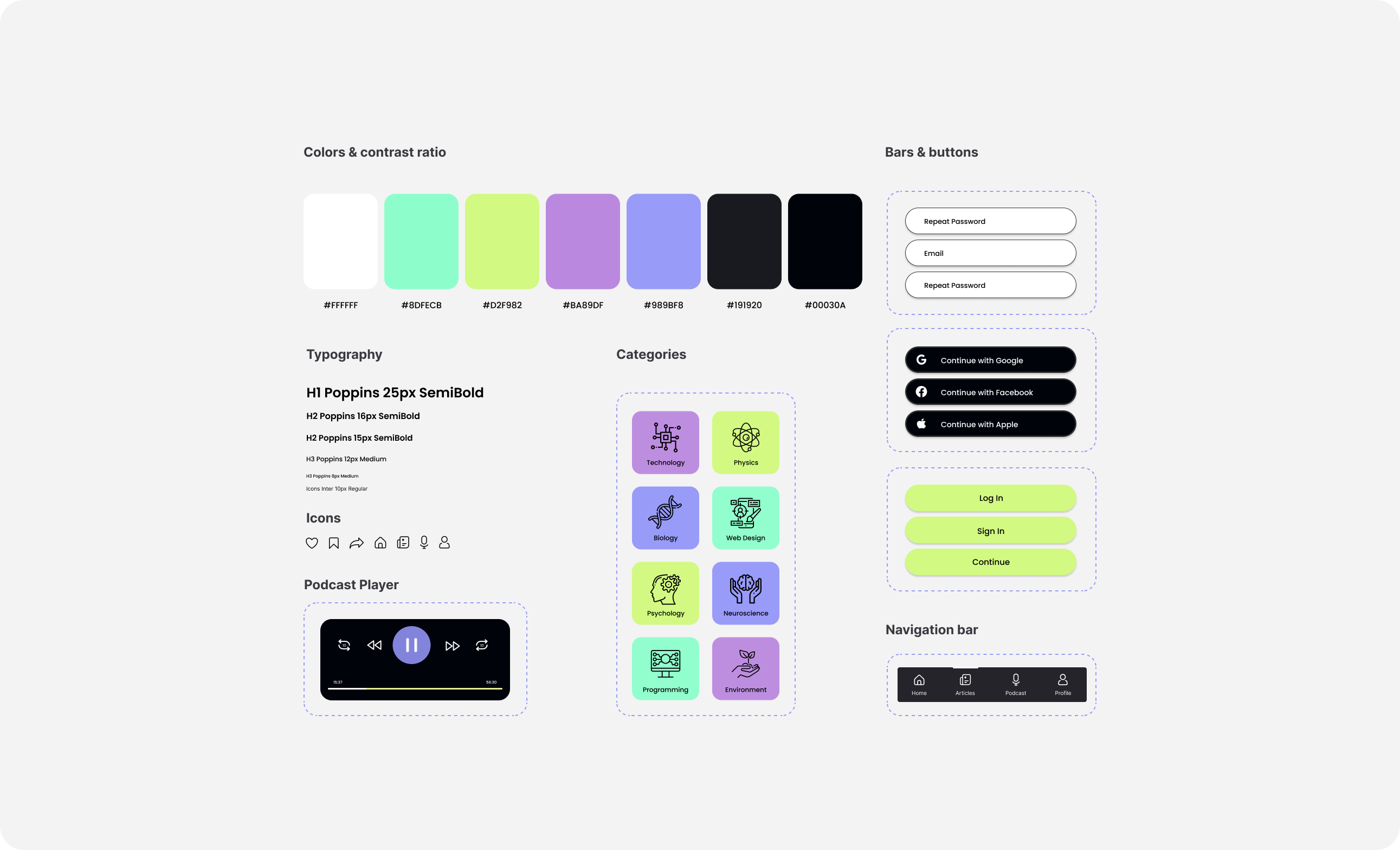
WIREFRAMES HIGH-FIDELITY
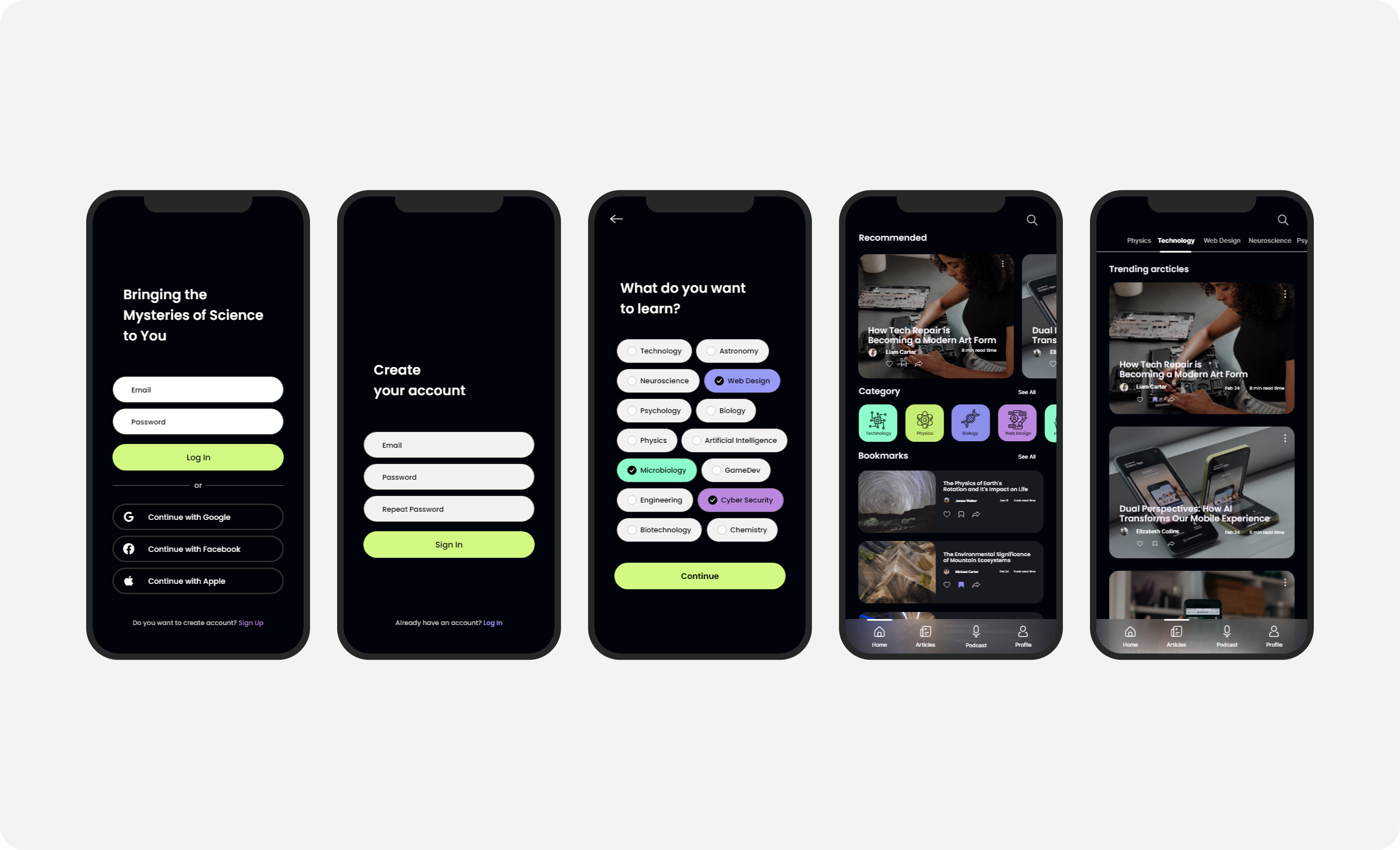
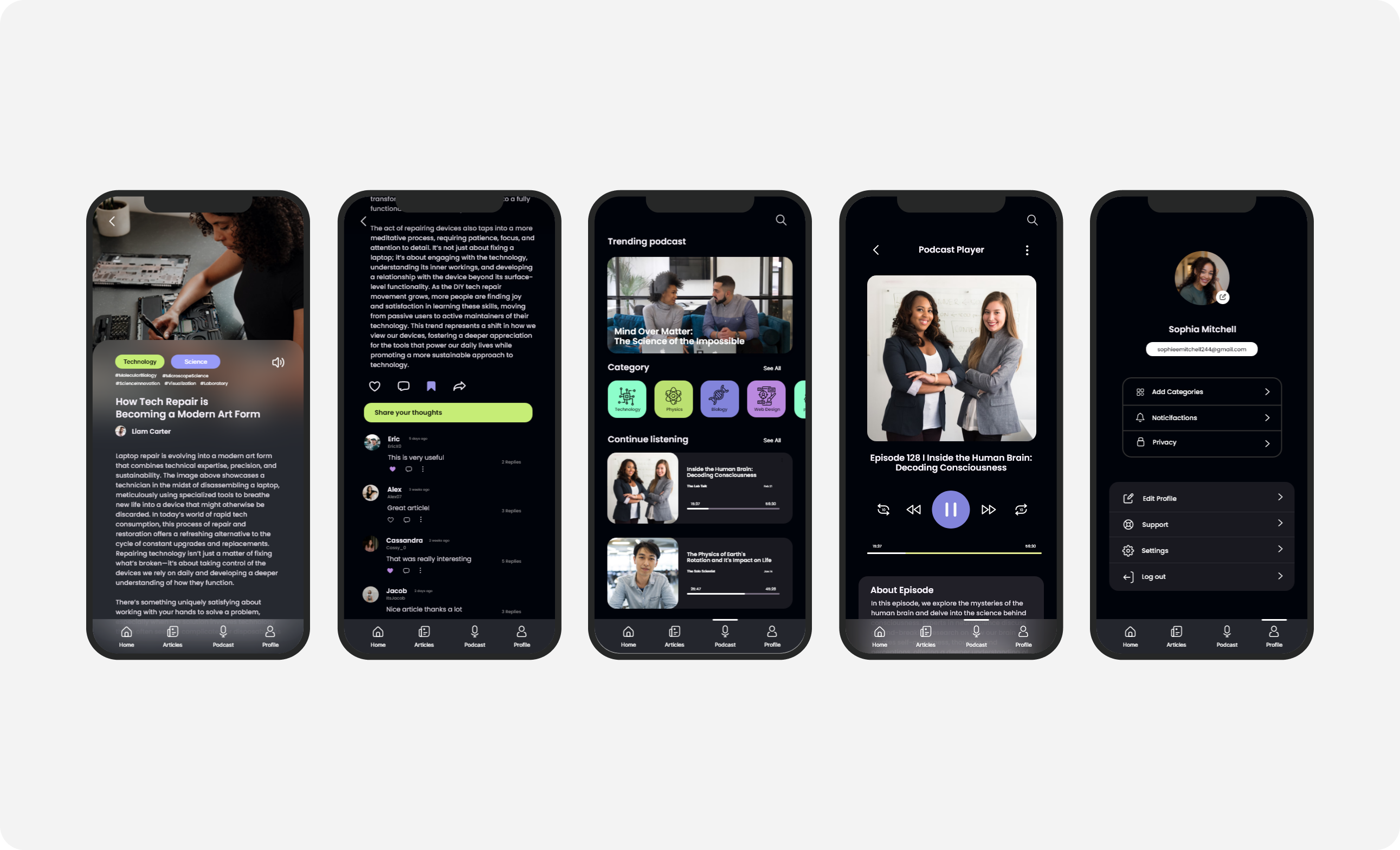
PROTOTYPE